Spider veins are small, visible blood vessels that can appear as red, blue, or purple lines beneath the skin. While they are usually harmless, many people choose treatment because they can affect the appearance of the legs, face, or other areas. Fortunately, modern spider vein treatment options can significantly reduce their appearance.
One option is laser treatment, which uses focused light energy to target unwanted blood vessels without requiring injections. But how does it actually work, and what can you expect from the process?
How Does Laser Spider Vein Treatment Work?
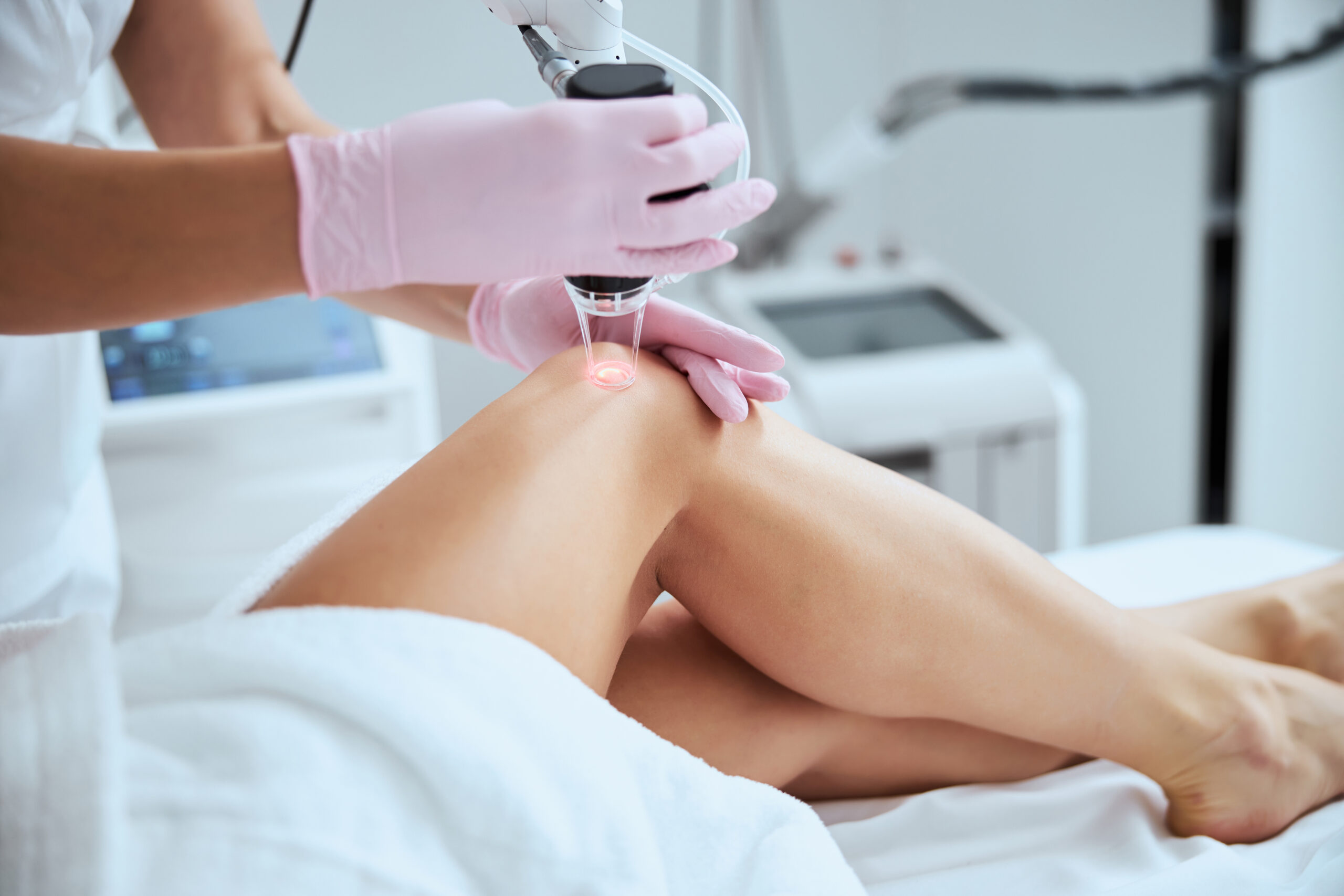
Laser spider vein treatment works by directing concentrated light energy toward the visible blood vessel. The laser’s energy is absorbed by blood within the vessel and converted into heat. This heat damages the targeted vessel, causing it to close or become less visible while minimizing damage to the surrounding skin.
Once the vessel has been treated, your body gradually breaks down and clears the affected blood vessel. Over time, the treated spider vein fades from view.
According to the American Academy of Dermatology, lasers can be used to treat spider veins and small varicose veins, with some smaller vessels becoming less visible relatively quickly while others may take weeks or months to fade.
The exact approach depends on factors such as the vein’s size, color, location, and your individual skin characteristics. That’s why an evaluation with a qualified medical professional is an important first step.
What Happens During Laser Treatment?
Laser spider vein treatment is generally performed as an outpatient procedure. During treatment, the provider directs the laser over the visible blood vessels using carefully selected settings.
You may experience a sensation of warmth, snapping, or brief discomfort as the laser delivers energy to the vessel. Cooling methods may be used to help make the procedure more comfortable and protect the surrounding skin.
Because laser treatment doesn’t involve injecting a solution into the vein, it can be an appealing option for certain patients and specific types of spider veins. However, laser isn’t automatically the best choice for every vein. A medical evaluation can help determine whether laser treatment, sclerotherapy, or another approach is more appropriate.
What Happens After Laser Spider Vein Treatment?
After treatment, you may notice temporary redness, swelling, sensitivity, or changes in the appearance of the treated veins. These effects generally improve as the area heals.
The treated blood vessels don’t necessarily disappear immediately. Smaller spider veins may fade relatively quickly, while larger vessels can take considerably longer. Some patients also need more than one treatment to achieve their desired level of improvement.
Protecting treated skin from sun exposure is also important. The American Academy of Dermatology recommends protecting the area from the sun following laser treatment to reduce the risk of unwanted pigmentation.
Is Laser Treatment Right for Spider Veins?
Laser treatment can be useful for certain small superficial blood vessels, particularly when injections aren’t ideal. However, spider veins can vary considerably from person to person.
A consultation allows a medical professional to assess the appearance and distribution of your veins and determine the most suitable treatment. Spider veins can occasionally occur alongside underlying vein problems, so an appropriate evaluation is important rather than treating the visible vessels based on appearance alone.
At Rose MD Aesthetics, the practice takes a physician-led approach to aesthetic care, with board-certified physicians directly involved in patient care and treatment planning.
Laser Treatment vs. Sclerotherapy
Laser treatment and sclerotherapy work differently. Laser therapy uses concentrated light energy to heat and treat the targeted blood vessel. Sclerotherapy, on the other hand, involves injecting a solution directly into the vessel to cause it to close and gradually be reabsorbed by the body.
Neither option is universally better. The appropriate treatment depends on the size and location of the veins, your medical history, skin characteristics, and your provider’s assessment.
The American Academy of Dermatology’s guidance on leg vein treatment is a useful resource for understanding the different approaches available.
Frequently Asked Questions
1. Does laser spider vein treatment hurt?
Most patients describe laser treatment as a brief warming, snapping, or stinging sensation. Comfort measures may be used during treatment, depending on the area and device.
2. How many laser treatments are needed for spider veins?
The number varies according to the size, number, and type of vessels being treated. Some spider veins respond after one treatment, while others require multiple sessions for further improvement.
3. How long does it take for spider veins to disappear after laser treatment?
Results are gradual. Smaller vessels may fade relatively quickly, while larger treated vessels can remain visible for several weeks or months before becoming less noticeable.
If you’re considering spider vein treatment, a professional consultation is the best place to start. Understanding why the veins have appeared and which treatment is appropriate can help you make a more informed decision about your care.